ERPNext, Microsoft 365 and Python automation, and the systems around them.
Fixed scope, agreed in writing before work starts.
One principal engineer does the work personally. Remote, across North America.
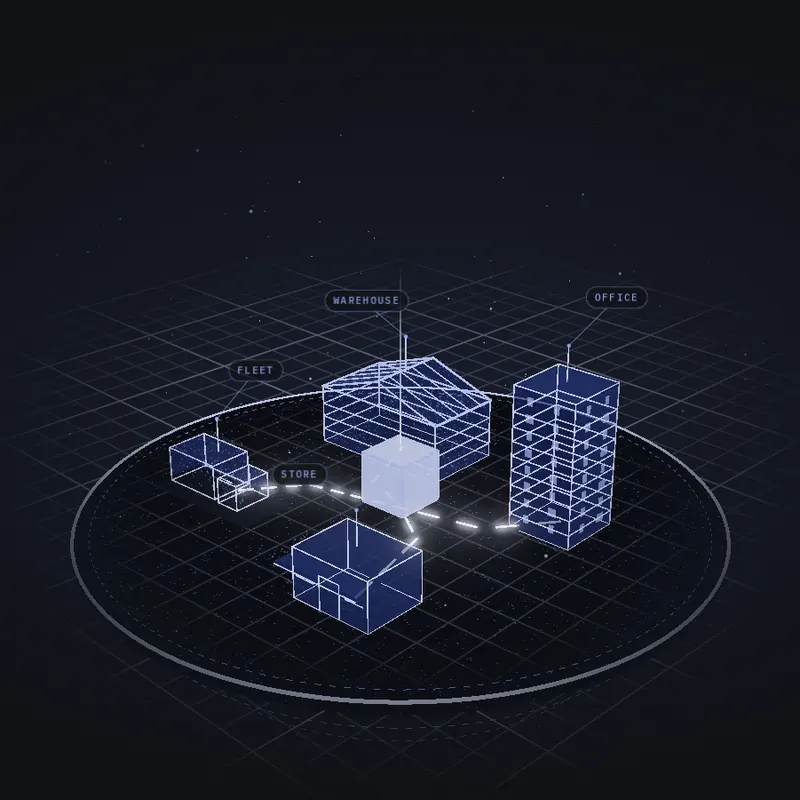
One business, as one model: fleet, warehouse, store and office.
What we do
Four kinds of work, all of them inside systems that are already load-bearing.
The work in this practice is almost always inside software that is running, that people depend on daily, and that has to keep working while it is changed. That shapes how we work as much as what we build.
Hand-offs between systems that currently run on people, made to run on their own: scheduled jobs, monitoring, messaging and integrations across Microsoft 365, storage, telephony, the ERP and line-of-business tools.
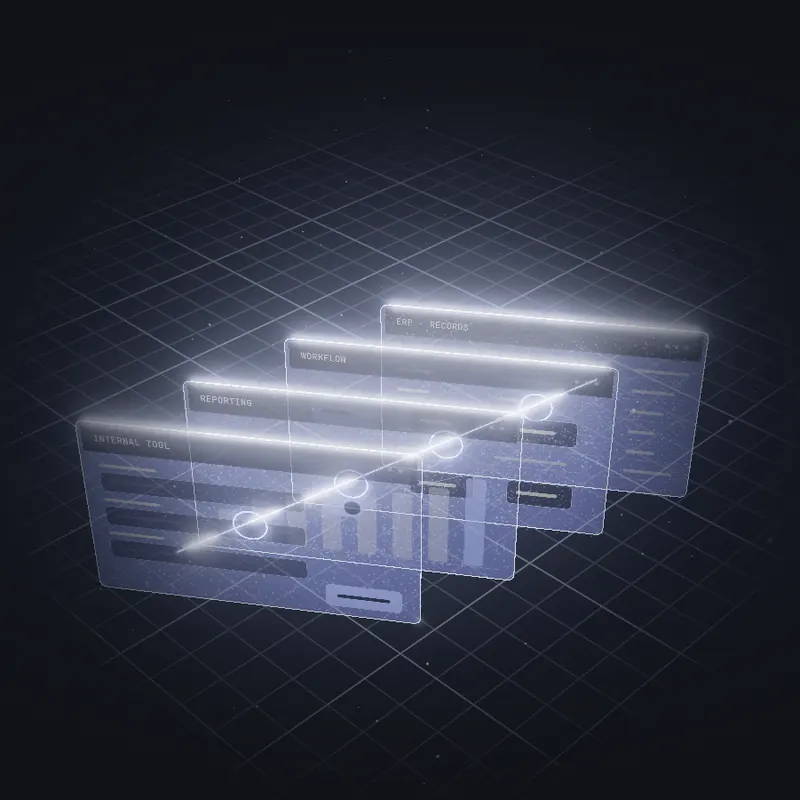
Purpose-built applications for one team or one process when nothing off the shelf fits, and rebuilding vendor-held or dying systems on platforms the business already pays for.
Moving a business off a legacy system into a modern ERP with the data mapped, ordered, validated and taken through go-live, on hosting we can provision and run; and taking over implementations that have stalled.
How an engagement runs
Three stages. You can stop after any of them.
We assess first, then agree the scope and price in writing before any build starts. Each stage stands on its own.
01
A short conversation
In writing first, then a call if it helps. No charge.
Enough to tell you whether this is our kind of problem. If it is not, we say so and point you towards what is.
02
A written assessment
Fixed scope, one to two weeks
We read the system you have, or the process a new tool has to serve, and hand you a document you own: what exists today, what should change, what that would take, and what to leave alone. You can act on it with or without us.
03
The work
Fixed scope, half up front
Quoted from what the assessment found, in writing, with the deliverables named. If the scope changes along the way, it is agreed as a change, with its own cost.
We take a small number of engagements at a time and do them properly. Both lists are here so you can tell quickly whether to write.
Talk to us if
A process still runs on people re-typing information between two systems, or on one spreadsheet that one person understands.
Your firm needs a tool built for the way it actually works, because nothing off the shelf does the job.
Your ERP is live and something you bill for depends on it, but the data, the customisations or the integrations around it are not right.
A migration or implementation has stalled, or the people who started it have moved on.
A system you rely on was built by a vendor who is gone, unresponsive, or holding the code.
A tool has to be built discreetly, for a small group of people, and the fact that it exists is part of what is confidential.
Not the right fit if
You want managed IT, a helpdesk, or somebody to run your network and servers.
You need a marketing website, or somebody on site.
Spreadsheetsstock_FINAL_v7.xls
EmailRE: FW: PO 4471
ERPstock count ≠ sheet
Microsoft 3651 inbox, 3 owners
File storageNew folder (2)
Vendor toolYour own toolno vendor, no code
Phone systemmissed, not logged
What a business actually runs on.
Who does the work
One principal engineer. No hand-off.
The person who reads your first message is the person who reads your code, maps your data, writes the assessment and builds the work. There is no account manager in between and no junior team the work is passed to afterwards.
You work directly with the engineer delivering your project, from the first discussion through implementation and handover. This page stays about the work: we operate under agreement and publish nothing that identifies a client or an employer.
After handover the system is documented and yours, so your own team or any other engineer can maintain it. If you want us to keep looking after it, that is agreed as its own fixed scope. Nothing about the build depends on one person staying available, and that is deliberate.
Platforms
ERPNext, Microsoft 365 and the Graph API, Python, Linux, Docker and cloud hosting.
Experience
ERP migrations, integrations, monitoring and internal tools, all in daily production use.
Background
Systems and infrastructure before software, so what gets built fits the environment it has to run in.
Tools built for how the business works, and yours to keep.
Start here
Start with what is running.
The system you have, the process you want to improve, or the tool you need built. If it is not our kind of problem, the reply will say so and point you towards what is.